
Food Safety Starts with Context at the Machine Level
Collecting production data is only the first step. When that data is tied to recipes, process stages, quality checks and operator actions, it becomes more useful for food safety decisions.
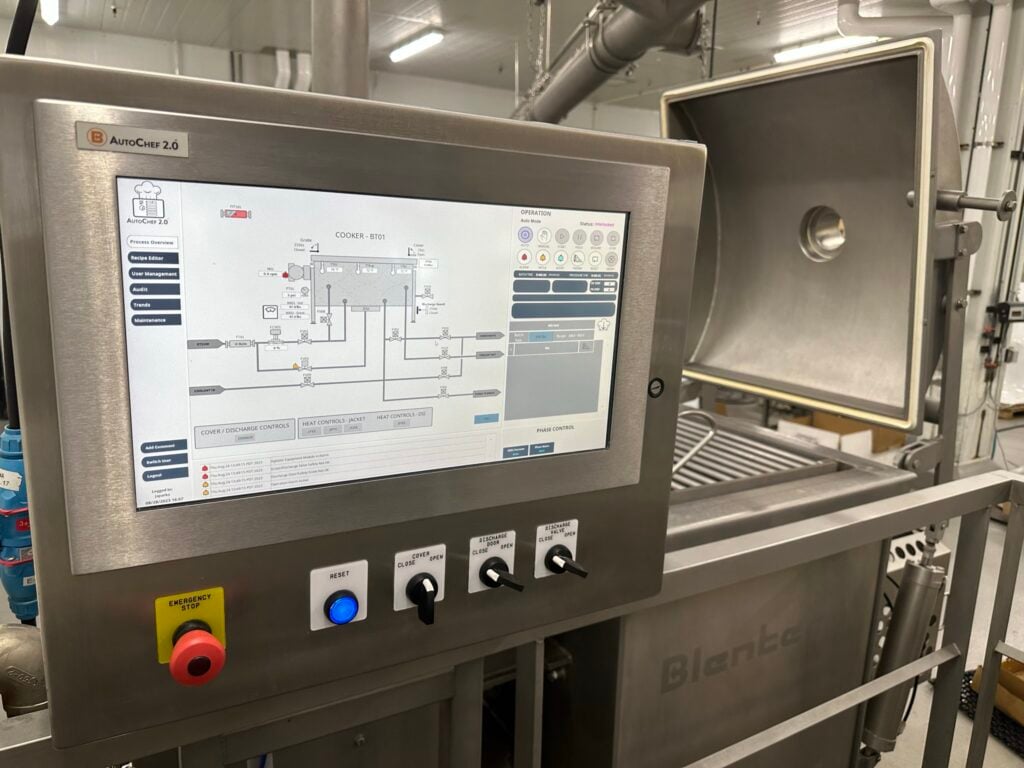
Food processors collect a steady stream of production data: temperature, time, weight, flow, equipment status, alarms and operator inputs. But to make that data useful, teams need context. What product was running? Which recipe step was active? Was the batch heating, holding, transferring or waiting? Did a quality check fall within its approved range? If it did not, what happened next?
The shift from collecting signals to building a complete, understandable production record—is the focus of the recent ProFood World article, “Delivering Context to Food Safety Data at the Machine Level.”
The article explores how food manufacturers are connecting machine-level information with automation and analytics to support faster, better-informed food safety decisions. Blentech CEO Daniel Voit contributed perspectives on recipe management, quality controls, data structure and the role of equipment software in creating useful process context.
A measurement needs a meaning
A temperature reading tied to a specific product, batch, recipe step, time requirement and instrument has much more value than a reading on its own. This distinction helps teams answer practical questions:
- Did the product reach the required temperature?
- Was it held there for the specified time?
- Were ingredient additions completed in the correct sequence and amounts?
- Were required quality checks performed before the batch advanced?
- Was an exception reviewed by someone with the proper authority?
- Can the production team retrieve a clear record after the batch is complete?
Context turns isolated data points into evidence that production, quality and food safety teams can interpret and act on.
Build food safety checks into the process
The best time to identify a problem is while there is still time to respond. Blentech’s AutoChef process control system uses recipe-driven steps to guide batch execution. A recipe can include critical control point monitoring, operator quality tests, ingredient additions, processing instructions and approved measurement ranges. If a quality result is outside its expected range, the system can require a supervisor override before the process continues. The result and the response are logged in the batch record.
Ingredient controls add another layer of protection. Automated additions can be verified through flow or weight tracking, while manual additions can use weight-based controls and, where configured, barcode verification. These checks help reduce the opportunity for the wrong ingredient or amount to move through the process unnoticed.
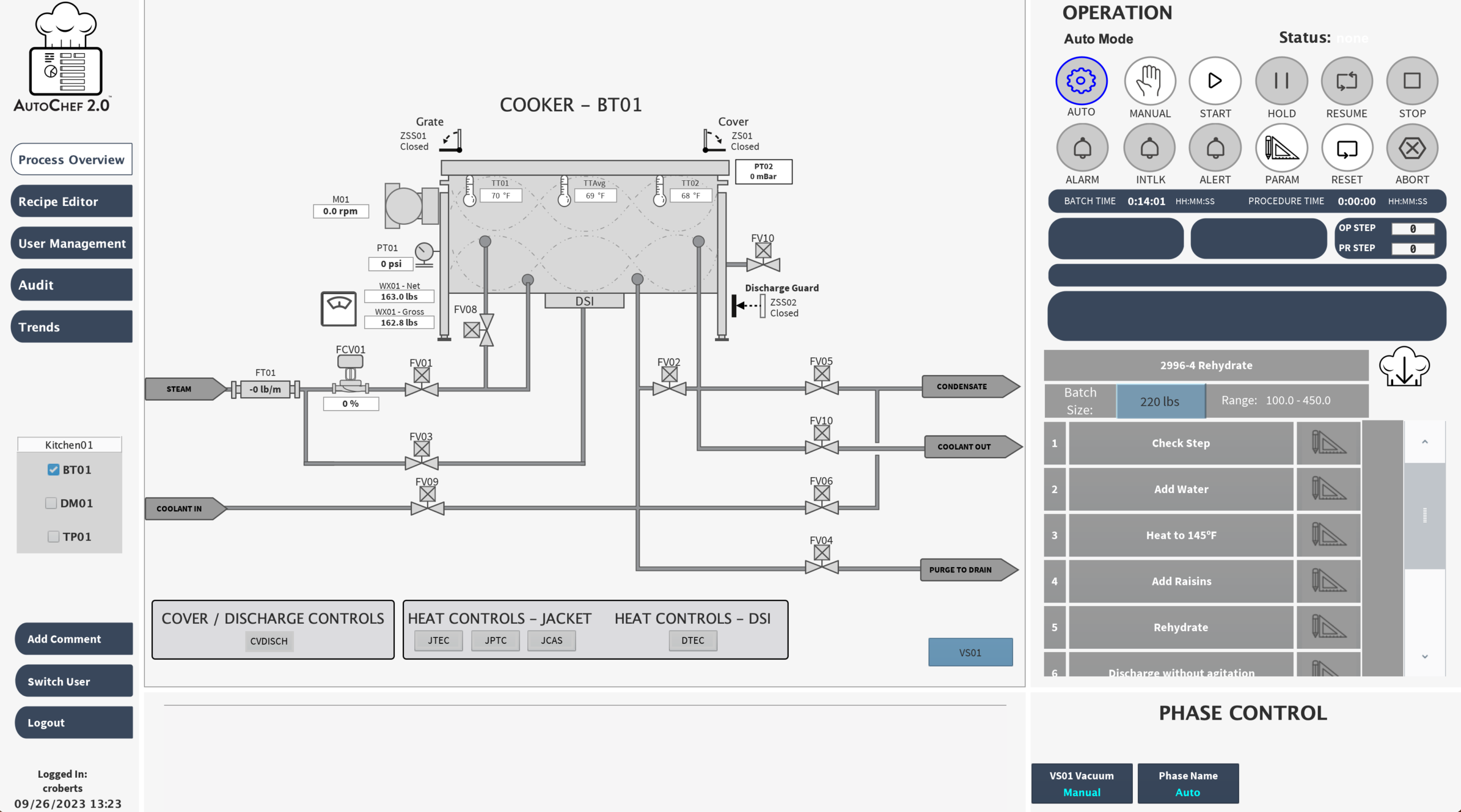
Role-based access also matters. Recipe builders, operators and maintenance personnel do not need the same permissions. Defined user roles help keep recipe changes, manual controls and overrides in the appropriate hands while preserving a record of what occurred.
Create records people can actually use
Food safety documentation should do more than prove that data was collected. It should help a team reconstruct the batch without relying on memory. ARTIS process intelligence extends the machine-level record by organizing production information around the recipe and the way the food was made. Depending on the system configuration, a completed batch report can bring together:
- Temperature history and time at temperature
- Recipe steps and process timing
- Ingredient-addition weights
- Quality assurance test results
- Operator comments and manual actions
- Overrides and process deviations
- Calibration information
- Timestamped images captured during production
Recipe revision history adds another important layer. When recipes are created or changed through ARTIS, previous versions are retained and can be recalled. That gives teams a clearer answer to a basic but consequential question: Which production standard was in effect for this batch?
With a structured record, quality teams can review an individual batch, compare it with prior production and identify where variation began. That can make investigations faster and improvement work more specific.
Support people with better information
Automation does not remove people from food safety. It gives them better information and clearer controls.
Operators still need to recognize unusual conditions. Supervisors still need to evaluate exceptions. Quality and food safety teams still define standards, interpret results and decide what action to take. Software helps by presenting relevant information at the right point in the process and preserving it for later review.
This is especially important as experienced employees retire, plants add new operators and manufacturers manage multiple recipes, shifts or facilities. A structured, recipe-driven system makes the approved process easier to follow consistently while giving experienced team members better visibility into exceptions.
Better context creates a stronger data foundation
The food industry is moving toward more connected plants, predictive analytics and AI-assisted decision-making. Those tools depend on well-structured information. A data point labeled only as “TT01” means far less to a person—or an analytical model—than a temperature reading identified by equipment, batch, product and recipe phase.
Food safety programs do not become stronger simply because more data is available. They become stronger when that data is accurate, understandable and connected to the decisions that shape the process.
That work starts at the machine level: define the process, guide its execution, capture the right information and preserve the complete production story.
Read the full ProFood World article to learn how equipment suppliers and food manufacturers are adding context to food safety data—and how that foundation can support the next generation of plant decision-making.
Frequently asked questions about food safety data and batch processing software
What is machine-level food safety data?
Machine-level food safety data is information captured directly from processing equipment and its operator interface during production. It can include temperatures, hold times, ingredient weights, flow measurements, equipment states, alarms, quality test results, operator actions and overrides. Connecting those records to the product, batch and recipe step makes them more useful for food safety review.
Why does production data need context?
A measurement alone does not explain what the process was supposed to be doing. Context connects a data point to the relevant product, recipe, production phase, operating limit and response. This helps teams determine whether the process followed the approved standard and where a deviation began.
How can batch processing software support food safety?
Batch processing software can guide operators through an approved recipe sequence, monitor critical process conditions, prompt required quality checks and record the results. When an entry falls outside its approved range, the system can require an authorized review or override and preserve that event in the batch record.
How do AutoChef and ARTIS support critical control point documentation?
AutoChef can incorporate critical control point and quality assurance steps into the production recipe, including operator instructions, measurement limits and enforced ranges. ARTIS organizes the resulting batch history into reports and trends that can include temperatures, process steps, test results, ingredient additions, comments, deviations and calibration information. The systems support documentation and review; the processor remains responsible for defining and validating its food safety plan.
Can automation help reduce ingredient-addition errors?
Yes. Automated additions can be checked through flow or weight tracking, while manual additions can use weight-based controls and, where configured, barcode verification. These controls help confirm that the intended ingredient and amount are added at the correct point in the recipe.
Can older food processing equipment contribute to digital food safety records?
In many cases, legacy equipment can be upgraded or retrofitted to capture and transmit process data. The available information and level of control depend on the machine, instrumentation and existing automation. An engineering review can determine what data can be collected and how it can be connected to a broader production record.
Does food processing software guarantee regulatory compliance?
No. Software can support standardized execution, documentation, traceability and faster review, but it does not replace a validated food safety plan, regulatory expertise or human judgment. Each processor remains responsible for its hazards, controls, verification activities and compliance obligations.
Read the full ProFood World article to learn how equipment suppliers and food manufacturers are adding context to food safety data—and how that foundation can support the next generation of plant decision-making.