
Vacuum Cooking Technology
Rapid, Gentle Concentration: Remove moisture by changing pressure — not just temperature — to protect flavor and integrity.
why vacuum cooking exists
Traditional atmospheric cooking relies on time and high heat to drive off moisture. That approach can scorch product, dull color, strip natural aromatics, and damage particulates as sugars and proteins break down under prolonged heat.
Vacuum cooking takes a different path.
By lowering pressure inside the cooker, water and moisture flash off at lower temperatures. Instead of boiling product hard at 212°F (100°C), vacuum cooking allows moisture to evaporate rapidly at far gentler temperatures—protecting flavor, color, texture, and yield.

how vacuum cooking works
- Reducing pressure lowers the boiling point of moisture inside the product.
- As soon as the product temperature is above that new boiling point, moisture flashes to vapor and leaves the vessel.
- Because this happens at a lower temperature than atmospheric boiling, concentration occurs without “cooked down” flavor or burn-on.
- Controlled agitation exposes more surface area to vacuum without damaging inclusions or delicate structures.
This allows processors to reach target Brix, viscosity, or reduction levels faster and more cleanly than with open-kettle or atmospheric systems.
Benefits of Atmospheric Reduction
Atmospheric Cooking
- Long reduction time with high heat exposure
- Flavor loss and thermal damage
- Risk of burn-on and cleaning downtime
- Particulates can break down or shred
- Heat damage to sugars, proteins, or dairy solids
Vacuum Cooking
- Rapid moisture removal at lower temperatures
- Texture and color are preserved
- Minimal burn-on with controlled evaporation
- Gentle agitation retains identity and structure
- Low-temp evaporation protects natural characteristics
Where Vacuum Cooking Creates Value
Fruit bases and fillings
Jams, jellies, puree concentrates, fruit slurry reductions
Sauces and condiments
Tomato reductions, curry bases, concentrated gravies and glaze systems
Savory Reductions
Broths, bone reductions, demi-glace style bases, high-flavor sauces
High-Brix Stabilizations
Where soluble solids need to increase without scorching or color change
Dairy and Sugar Systems
Sweetened condensed preparations, caramelized milk solids, milk/fruit blends
Control Is the Difference
Pulling vacuum alone isn’t enough. Without control, moisture can boil too violently, foaming or ejecting product. Blentech systems regulate vacuum in stages, bleeding air precisely to:
| Prevent boil-over during the most reactive early phase
| Match the vapor pressure to the product temperature for smooth evaporation
| Maintain evaporation temperature just high enough for controlled reduction
Energy Efficiency in Simple Terms
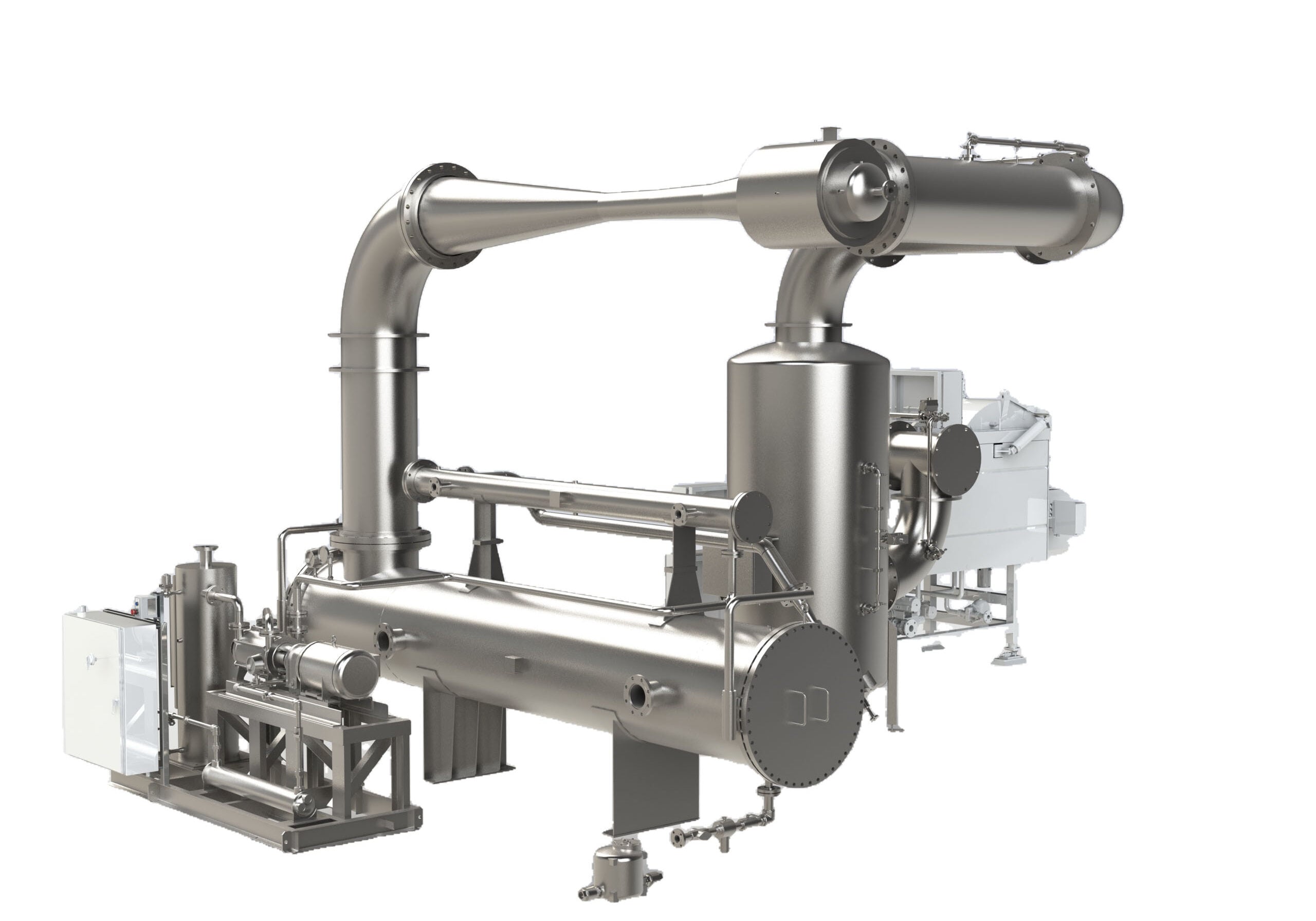
Vacuum cookers that use hybrid steam ejector + liquid ring pump systems can reach deep vacuum levels efficiently. Compared to atmospheric boil-down or continuous open-reduction, this approach:
Reduces steam consumption per pound of water removed
Lowers utility demand when paired with energy recovery on vapor loops
Can integrate with optional essence recovery or heat reclaim systems for additional savings
Practical Operation Notes
- Vacuum cooking is about controlled evaporation, not maximum vacuum pull.
- Ramp too fast and the product foams—pressure staging prevents this.
- Surface area and gentle agitation drive performance—not just vacuum depth.
- Getting the most out of vacuum cooking depends on pairing pressure curves with heat input and product composition.
Why Blentech Vacuum Cooking Systems Are Different
Blentech systems are designed for vacuum from the ground up—not retrofitted kettles. That makes a difference in real production:
- Built for vacuum performance with high-surface-area designs that increase evaporation rates and cut reduction times by up to 80%.
- Agitation exposes product surface efficiently without damaging particulates.
- Jacket zoning and high-efficiency heat transfer reduce cook time before vacuum engagement.
- Control software manages pressure curves and boiling behavior based on product response—not just time.
- Trials at the Blentech Innovation Center have validated reductions, Brix targets, color retention, and flavor concentration across fruit, dairy, savory, and sauce applications.
Simple. Adaptable. Built to Scale.
Blentech’s vacuum cooling systems are built around robust pressure vessel engineering, hygienic design principles, and smart automation—delivering rapid flash cooling, maximized yield, and high-efficiency performance for processors who demand more.