
Industrial Food Processing Automation That Fits Your Operation
A Flexible Approach to Food Processing Controls Automation in food processing is often treated like a binary decision: manual or fully automated. In reality, the most effective systems live in between. At Blentech, controls are designed around how your team…
A Flexible Approach to Food Processing Controls
Automation in food processing is often treated like a binary decision: manual or fully automated. In reality, the most effective systems live in between. At Blentech, controls are designed around how your team actually works.
Simple and Operator-Driven Controls
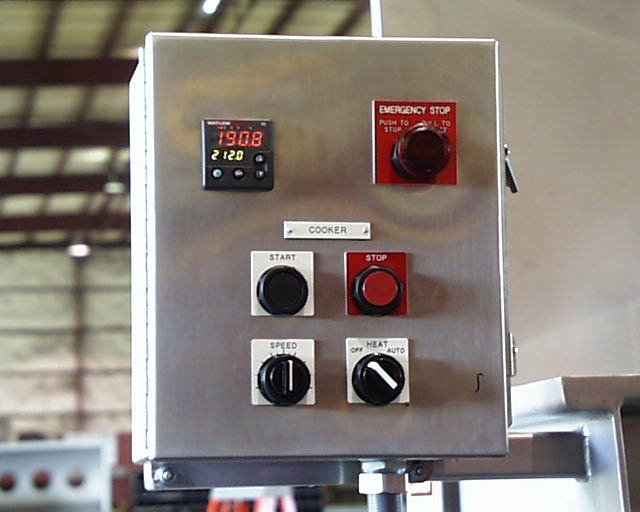
Some operations need simple, predictable control. Operators manage key functions directly through an intuitive interface, with automation supporting critical elements like temperature stability and safety. Core process variables are controlled in the background, while operators retain hands-on control of mixing, timing, and discharge.
This approach reduces complexity while maintaining consistency and process reliability.
Scalable Automation with Recipe Control
As production grows, controls can expand into recipe-driven systems that guide operators step by step, standardize execution, and reduce reliance on memory or manual timing.
Recipe control improves consistency across shifts and locations while lowering training requirements and minimizing operator error.
Fully Automated Systems with Batch Reporting and Data Capture
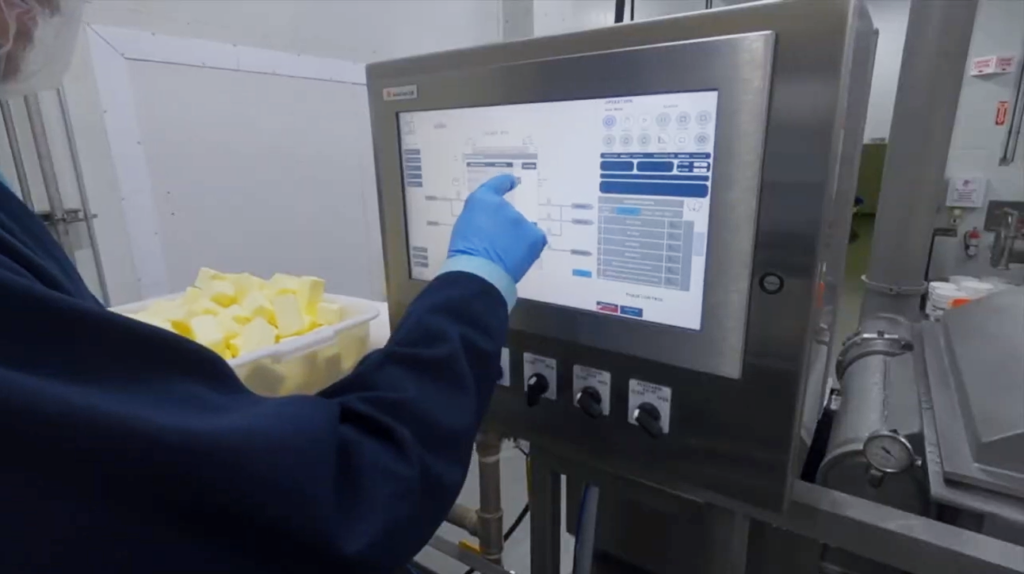
At the highest level, fully automated systems coordinate entire processes and capture detailed batch data. Every step is tracked, creating digital batch records that support compliance, troubleshooting, and continuous improvement.
Real-World Example: Automation That Supports Operators
Most operations do not sit at one extreme. They move along this range.
At Hanssens, a high-volume meal producer, automation reduced cognitive load and standardized execution across multiple facilities. Operators were not removed from the process. They were able to focus more on product quality while the system handled timing, sequencing, and repeatable tasks.
This reflects a broader approach to automation: keeping humans in the loop. As Blentech CEO Daniel Voit explains in an article in Chief Executive Magazine, effective systems are designed by separating where automation adds consistency and where human judgment is still required. The goal is not full replacement, but a configurable balance between automated steps and operator decision-making.
Human-Centered Automation in Food Manufacturing
Even in highly automated systems, control is not rigid. Operators can adjust processes, respond to variability, and apply their experience where it matters. Automation manages consistency. People remain responsible for quality.
That is the balance.
Custom Automation Systems Designed Around Your Process
Blentech systems are configured to match your operation, your products, and your team.
We provide training, but more importantly, we build controls around your process. Recipe control, machine control, and user interaction are all tailored to how you run.
Automation is not a fixed solution. It is a range of control, designed to work for you.
Improve Efficiency Without Overcomplicating Your Operation
Talk to our team about automation solutions that reduce errors, streamline production, and give you the right level of control.