
Blentech at Food Freezing Forum: A Smarter Approach to Freezer Throughput
Insights from the Food Freezing Forum (Hamburg) On March 17th, Blentech’s Lasse Krantz Simonsen attended the Food Freezing Forum in Hamburg, organized by Food Cluster Hamburg alongside INTERNORGA. In addition to exhibiting, Lasse participated in a panel discussion with other…
Insights from the Food Freezing Forum (Hamburg)
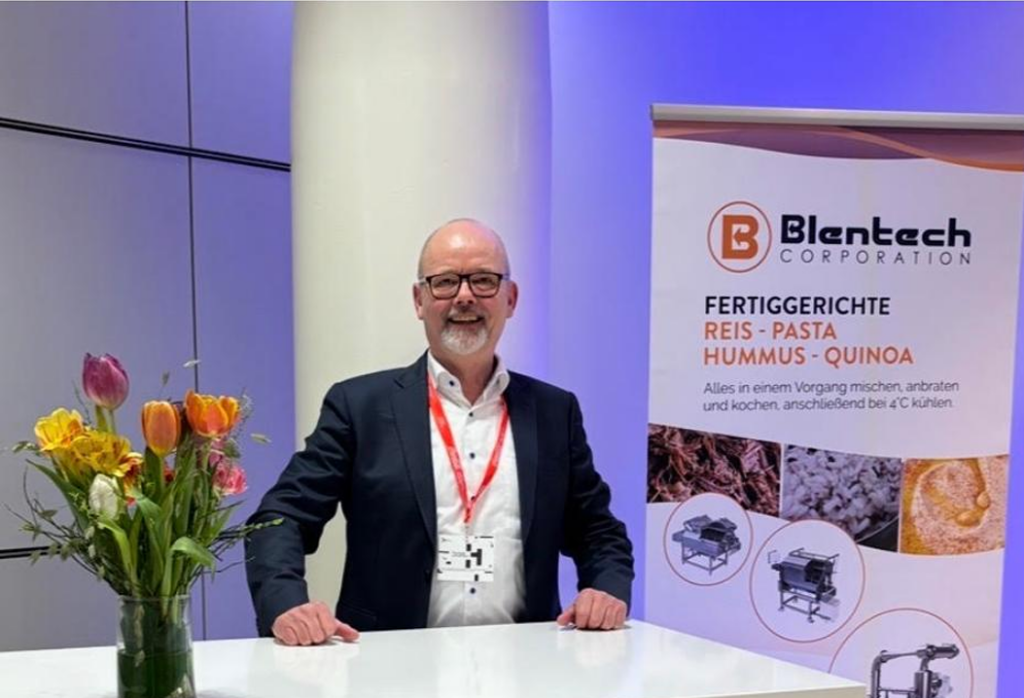
On March 17th, Blentech’s Lasse Krantz Simonsen attended the Food Freezing Forum in Hamburg, organized by Food Cluster Hamburg alongside INTERNORGA.
In addition to exhibiting, Lasse participated in a panel discussion with other companies in the freezing space, sharing Blentech’s approach to increasing freezer capacity and reducing energy consumption through upstream process design.
The Core Problem: Freezer Capacity vs Energy Use
Across presentations and discussions, the same issue kept coming up:
Freezers are limiting throughput—and they’re expensive to run.
Processors are trying to:
- Push more product through existing freezers
- Reduce energy consumption per kg
- Avoid adding new freezing infrastructure
Most solutions presented focused on improving the freezer itself. That’s where Blentech’s position differs. In both booth conversations and the panel discussion, Lasse kept the message simple:
If the freezer is the bottleneck, stop sending it so much work.
Instead of optimizing the freezer, reduce moisture load, thermal load, and batch variability before the product ever gets there.
A Different Approach: Reduce the Load Before Freezing
Blentech’s vacuum cooling systems sit upstream of freezing and directly change what the freezer has to handle.
Three measurable effects:
1. Less Water to Freeze
- ~10–12% moisture removed
- Lower mass and lower freezing load
2. Lower Entry Temperature
- Product enters stabilized and pre-cooled
- Reduces peak demand inside the freezer
3. Shorter Freeze Cycles
- Up to 30–50% reduction in freeze or freeze-dry time
- More batches per shift using the same equipment
One point that resonated during discussions:
Cooling time is not significantly affected by batch size.
Large batches cool at nearly the same rate as small ones.
That removes a major constraint in production planning.
What That Means Operationally
This is not incremental improvement—it changes how the freezer is utilized:
- Higher throughput per shift without adding equipment
- More stable freezer loading (less variability batch-to-batch)
- Lower energy per unit of product
- Deferred capital spend on additional freezing capacity
In practical terms, you’re increasing effective freezer capacity without touching the freezer.
Panel Discussion Takeaway
A consistent pattern in the discussion:
- Most approaches focus on making freezing more efficient
- Very few address how to reduce the demand placed on freezing
That gap is where upstream processing, specifically vacuum cooling, becomes relevant.
Evaluate Your Freezing Bottleneck
Freezer performance is a function of what enters the system:
- Temperature
- Moisture content
- Batch consistency
Blentech helps quantify and reduce that load upstream.
If you’re looking to model capacity gains or reduce cycle times, we can run through your process and identify where vacuum cooling fits: