
Why Heat-Up Times Drift: Inspecting Steam and Process Instrumentation
When a food processing unit takes longer to reach temperature, the vessel itself is not always the problem. Thermal performance depends on a connected system of steam supply, valves, jackets, injectors, condensate return, sensors, and instrumentation. A change anywhere in…
When a food processing unit takes longer to reach temperature, the vessel itself is not always the problem.
Thermal performance depends on a connected system of steam supply, valves, jackets, injectors, condensate return, sensors, and instrumentation. A change anywhere in that system can affect heating rate, temperature control, and cycle time.
Troubleshooting slow or inconsistent heating requires looking beyond a single component.
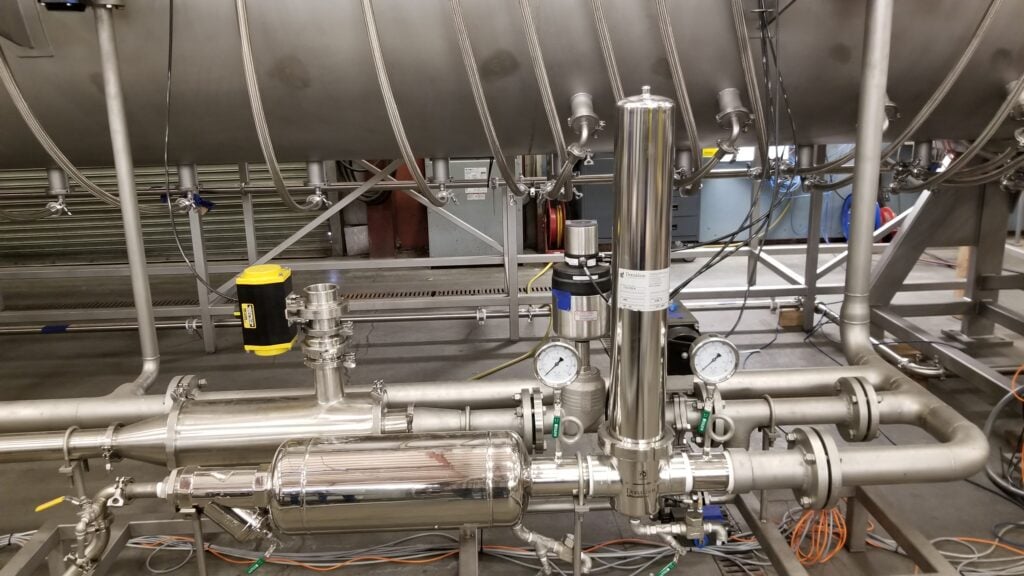
Follow the Steam Through the System
In steam-heated equipment, energy has to reach the unit, transfer through the heating surface, and leave the system as condensate.
A restriction, poorly operating valve, steam supply issue, or condensate return problem can reduce how effectively that process happens. The result may be slower heating, unstable temperature control, or longer production cycles.
Inspections review the steam jacket, including endplate and plug weld areas, along with the steam supply and return. Assessing those areas together helps determine whether the problem is related to the vessel, a component, or the plant utility system.
Injectors and Valves Affect Process Control
Direct steam injectors and process valves must operate as intended for the recipe to remain repeatable.
An injector that is partially restricted or a valve that does not respond consistently can change how quickly steam enters the product or jacket. Those changes may affect temperature rise, moisture addition, cycle time, or final product consistency.
The equipment may continue to operate, but operators may compensate by extending the cook or making manual adjustments. Over time, those adjustments can become normalized even though the underlying problem remains.
The multipoint inspection includes injectors and valves so these components can be evaluated as part of the complete thermal system.
Accurate Instruments Matter
A process can only be controlled as accurately as it is measured. Temperature, pressure, and flow instruments provide the information used by operators and control systehttps://blentech.com/industrial-food-automation-solutions/ms to make process decisions. If an instrument is damaged, drifting, or no longer responding correctly, the displayed value may not reflect actual conditions.
This can create two different problems:
- The system may be performing correctly while the instrument suggests otherwise. Or the process may be outside the desired range while the display appears normal.
- The inspection reviews instrumentation for temperature, pressure, and flow, along with control panels, safety sensors, and the HMI.
Diagnose Before Replacing
When cycle times increase, replacing parts without confirming the cause can add cost without solving the problem.
A complete inspection provides a more disciplined approach. It allows the service engineer and customer to evaluate the full path from steam supply through process measurement before deciding what action is required.
That can help distinguish between:
- A mechanical equipment issue
- A utility limitation
- A valve or injector problem
- A condensate return issue
- An instrumentation or control concern
Look Beyond the Symptom
A slower process is just a symptom. By inspecting the steam system, components, controls, and instrumentation together, customers can make better-informed decisions and avoid treating the wrong problem.
Contact Blentech Service when heat-up times, temperature control, or cycle performance begin to change.
FAQ
Why is my food processing equipment taking longer to heat?
Longer heat-up times may be caused by steam supply limitations, restricted injectors, poorly operating valves, condensate return problems, changes in jacket performance, or inaccurate temperature, pressure, and flow instruments.
Can a temperature sensor make a process appear to heat slowly?
Yes. A drifting or damaged sensor may report a temperature that does not reflect actual process conditions. Comparing instrument readings with verified measurements helps distinguish a heating problem from a measurement problem.
What should be inspected when heat-up times change?
The inspection should consider the complete thermal system, including steam supply, jackets, injectors, valves, condensate return, instrumentation, controls, safety sensors, and the HMI.